When a tire abruptly loses pressure while driving, the immediate instinct is often to slam on the brakes. However, doing so can compromise your steering control and destabilize the vehicle. Instead, maintain a firm grip on the steering wheel, ease off the accelerator smoothly, and steer toward a secure spot completely away from active traffic lanes. Turn on your hazard lights immediately to alert fellow motorists of your compromised position before stopping on a stable, level surface.
Before attempting any roadside inspection, carefully assess your immediate surroundings and environmental risk factors. If you find yourself stranded along a high-speed highway or during severe weather conditions, staying inside your locked vehicle with your seatbelt fastened is often the safest protocol while waiting for professional help. Attempting to change a wheel on a slope, soft shoulder, or in low-visibility environments exposes you to severe safety hazards and mechanical risks if your jack slips.
Should conditions be safe enough to evaluate the situation, check whether your spare tire is in usable condition and verify that your jack and lug wrench are accessible. A critical mistake many drivers make is trying to roll the vehicle “just a little further” on a completely flat tire to reach a nearby gas station. Doing this permanently ruins the tire casing, deforms the rim, and frequently leads to expensive collateral damage to your alignment, suspension, or braking components.
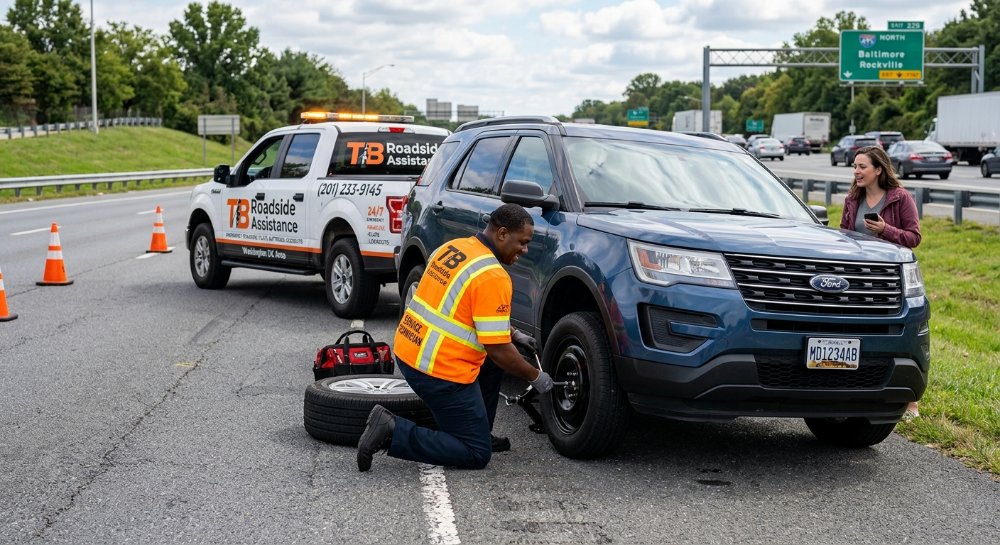
Utilizing a professional roadside assistance service for your tire change eliminates physical exertion, safety hazards, and mechanical guesswork. When contacting your assistance provider, be prepared to share your precise location, vehicle specifics, and whether you have a viable spare ready. This enables dispatchers to coordinate the right equipment quickly, ensuring you get back on the road efficiently and securely without unnecessary delays.